
Inside the Patchwork: How Subcultures Shape Society from the Margins Inward
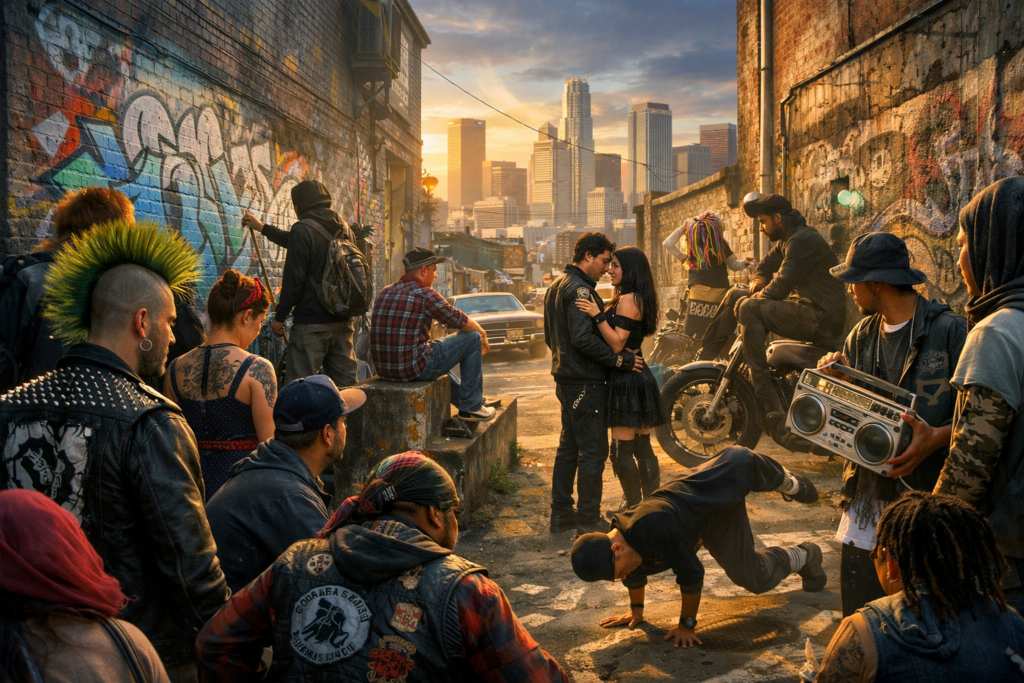
What Subcultures Are—and What They Are Not
Subcultures are groups within a larger society that develop distinct identities, norms, symbols, and practices. They can be organized around music, fashion, politics, hobbies, spirituality, work, neighborhood life, or digital spaces. What makes a subculture more than a passing trend is a shared sense of meaning: members recognize one another, invest in specific rituals or aesthetics, and often feel different from—sometimes in tension with—the mainstream.
Subcultures are not automatically “countercultures.” A counterculture actively rejects dominant values (for example, anti-consumerist or anti-authoritarian movements). Many subcultures are simply alternative, providing a place to belong without necessarily opposing society. Others sit somewhere in between: they critique certain norms while still participating in broader institutions like school, work, family, and media.
Why Subcultures Form: Belonging, Identity, and Constraint
People gravitate toward subcultures for reasons that are both personal and structural. On a personal level, subcultures offer identity-building—an answer to “Who am I?”—especially during adolescence and young adulthood. On a structural level, they can emerge when mainstream culture limits expression, status, or opportunity. When someone feels unseen, stereotyped, or constrained, a subculture can provide recognition, language, and a shared social world.
Subcultures also form around expertise and craft. Skate communities, cosplay circles, maker spaces, and gaming scenes develop their own vocabularies and informal rules that separate insiders from casual participants. This “insider knowledge” can be protective and empowering, though it can also become gatekeeping.
How Subcultures Communicate: Symbols, Style, and Ritual
Subcultural life is often visible through symbols—clothing, hair, music preferences, memes, slang, patches, playlists, or specific brands. These are not superficial details; they function as social signals. A band tee, a coded phrase, or a style of dance can communicate affiliation quickly, making it easier to find allies and avoid hostility.
Rituals are just as important as style. These can include attending shows, participating in online forums, meeting in certain locations, celebrating “drops” of new content, or learning a skill passed between members. Ritual creates consistency, and consistency creates trust.
Common Elements of Subcultural Life
- Shared aesthetics: fashion, graphics, sound, and design that signal membership.
- Values and ethics: explicit beliefs (e.g., DIY independence) or implicit norms (e.g., authenticity).
- Boundaries: insider/outsider distinctions, sometimes enforced through jargon or status markers.
- Spaces: venues, neighborhoods, campuses, and increasingly digital platforms.
- Stories: origin myths, influential figures, and collective memories that build continuity.
Subcultures as Social Laboratories
Subcultures are often where social experimentation happens first. New forms of art, language, and identity can be tested in smaller communities before spreading. They can also provide early signals of broader societal changes—shifts in gender expression, attitudes toward labor, or debates about surveillance and privacy might appear in niche scenes years before they enter mainstream conversation.
Because they are smaller and more flexible than large institutions, subcultures can adapt quickly. They invent informal governance: moderators set norms online, venue communities negotiate safety practices, and creators shape ethical standards about credit, remixing, or collaboration. When successful, these practices can influence how wider communities think about inclusion, consent, and accountability.
The Tension: Authenticity, Commercialization, and “Selling Out”
As subcultures grow visible, they often attract commercial interest. Brands borrow aesthetics, streaming platforms promote certain sounds, and influencers popularize formerly niche styles. This can create opportunities—artists earn income, events gain resources, and visibility reduces stigma. But it can also dilute meaning when symbols are detached from the community’s values.
The debate over “authenticity” is partly about power: who benefits when a subculture’s style becomes profitable? Longtime members may feel displaced when newcomers adopt the look without understanding the ethics, history, or struggles behind it. On the other hand, strict authenticity rules can become exclusionary, discouraging diversity and reinforcing hierarchy. Most scenes continuously renegotiate these boundaries, deciding what can change and what must stay protected.
Digital Subcultures: Speed, Scale, and Fragmentation
Online platforms have transformed subcultures by reducing the need for geographic proximity. People can find community through hashtags, servers, fandom spaces, and niche media channels. This expands access for those in isolated areas and enables rapid innovation: new slang, aesthetics, and micro-genres can emerge and mutate in weeks.
At the same time, digital environments encourage fragmentation. Instead of one cohesive scene, there may be dozens of sub-scenes with slightly different rules. Algorithms can intensify conflict by rewarding outrage, and anonymity can lower empathy, leading to harassment or factionalism. The benefits of reach and creativity come with new challenges in moderation, safety, and misinformation.
Subcultures and Social Inequality
Subcultures do not exist outside politics. Race, class, gender, sexuality, disability, and immigration status shape who can safely participate, who is celebrated, and whose contributions get recognized. Some scenes are born from marginalization—communities create their own spaces in response to exclusion. Others may reproduce inequality through subtle norms: assumptions about money for gear, access to venues, or “acceptable” ways of speaking.
Understanding subcultures sociologically means looking beyond aesthetics to infrastructure. Who owns the venues or platforms? Who can travel to events? Who is policed more heavily in public spaces? These factors determine whether a subculture becomes a pathway to empowerment or another site of exclusion.
How Subcultures Influence the Mainstream
Subcultures shape society in multiple directions. Sometimes their influence is direct, as when a music scene changes popular sound. Sometimes it is indirect, as when they normalize new identities or broaden the range of acceptable self-expression. Subcultures can also introduce new forms of civic action—mutual aid networks, benefit shows, community zines, or fundraising streams—models that can travel into wider public life.
Importantly, mainstream culture does not just “discover” subcultures; it negotiates with them. Media coverage can stigmatize or romanticize. Policy can suppress or accommodate. Over time, what was once shocking may become familiar, and what was once invisible may become a new center of cultural attention.
Approaching Subcultures with Respect
If you are entering or studying a subculture, curiosity matters, but so does care. Treat communities as living worlds, not costume shops. Listen for what members value, how they define harm, and what histories they carry. Participate in ways that contribute—support creators, follow safety norms, credit sources, and avoid extracting stories or aesthetics without reciprocity.
Practical Guidelines for Engagement
- Learn before labeling: ask how members describe themselves rather than assuming categories.
- Respect boundaries: some spaces are private for safety or cultural reasons.
- Support the ecosystem: pay for work, attend events responsibly, and credit origins.
- Be mindful of visibility: what feels like “sharing” can expose others to risk.
Conclusion: A Society Made of Many Societies
Subcultures reveal that society is not a single uniform culture but a patchwork of overlapping worlds. They offer belonging, creativity, and resilience, while also reflecting the inequalities and conflicts of the broader social landscape. By paying attention to how subcultures form, evolve, and interact with power, we gain a clearer picture of how cultural change happens—often first in the margins, and then everywhere.
